June 3, 2026 • Yuki Brennan • 9 min reading time • Prices verified June 18, 2026
Teething Mittens for 0–6 Month Babies: Fit, Food-Grade Silicone, and Anti-Drop Design
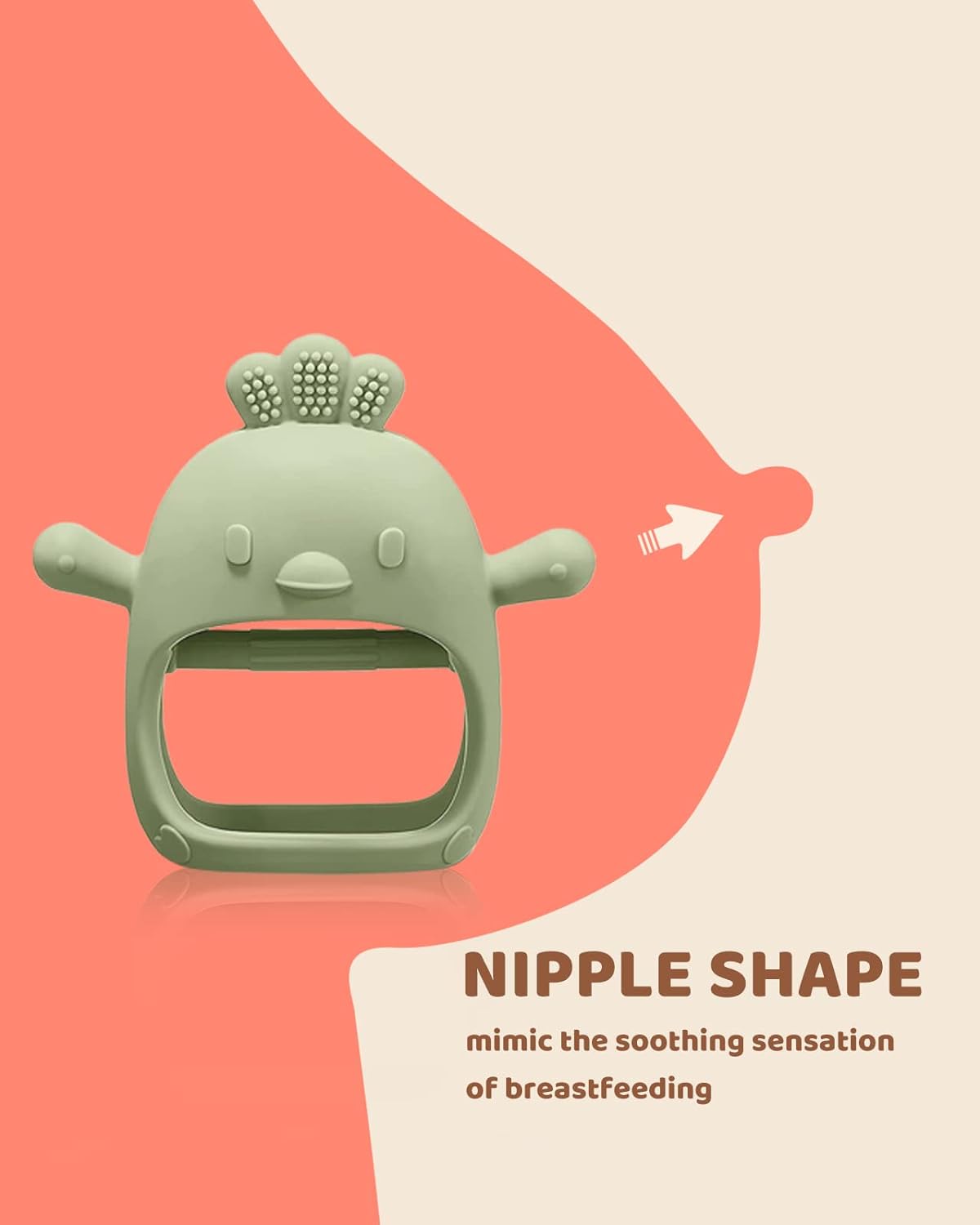
If your baby has recently discovered their fists — gnawing on knuckles, drooling through onesie number three by 9 a.m., and fussing in a way that feels distinctly gum-related — you are likely staring down the early teething window. Teething is the process by which a baby’s first teeth push through the gum line, and for many babies it begins showing symptoms as early as eight to twelve weeks, well before the first tooth actually surfaces. A teething mitten is exactly what it sounds like: a soft mitten, typically made with a textured chewing surface built into the palm or back of the hand, designed so a baby can self-soothe by chewing on something safe rather than bare skin. This guide walks you through the three things that matter most when you’re buying one for a 0–6 month baby — material safety, wrist fit, and anti-drop construction — so you can make a confident decision without wading through marketing copy that all starts to sound the same.
Why 0–6 Months Is Its Own Category
It’s tempting to grab whatever teether is on the shelf and call it done. But the 0–6 month window has specific constraints that make product selection genuinely different from buying for a 9- or 12-month-old.
Motor control is limited. Babies under six months have not yet developed the pincer grasp or reliable hand-to-mouth aim. They can’t reliably hold a ring teether or direct a pendant-style toy to the right spot. What they can do is clench their fist and bring it to their mouth — so a mitten works with that instinct rather than fighting it.
Gum pressure is lower, but sensitivity is high. Per the American Academy of Pediatrics’ guidance on HealthyChildren.org, early teething discomfort is primarily about pressure and inflammation in the gum tissue, not yet about the mechanical forces a full-blown chewer applies at 12 months. That means you don’t need maximum density or bite resistance — you need a surface that is textured enough to provide counter-pressure relief, but gentle enough that it doesn’t irritate already-inflamed tissue.
Sizing is unforgiving. A mitten that slips off constantly isn’t a teething tool — it’s a choking-adjacent hazard once it lands in the crib. Wrist circumference for newborns averages around 8–9 cm; by six months, that has grown to roughly 10–11 cm. Products that don’t account for this range will fit well for about three weeks and then become either a tourniquet or a sock puppet.
The practical takeaway: shop specifically for the 0–6 month category, not general infant teethers.
Material Safety: What “Food-Grade Silicone” Actually Means
You will see food-grade silicone on almost every teething mitten sold in 2026. It’s worth understanding what that phrase does and doesn’t guarantee.
What food-grade silicone is: Silicone is a synthetic polymer made from silicon (a naturally occurring element) bonded with oxygen and carbon. “Food-grade” means the silicone formulation meets standards for direct, prolonged contact with food or mucous membranes — it does not leach BPA (bisphenol A, a chemical linked to hormonal disruption), phthalates, PVC, or latex. For a product that will spend significant time in an infant’s mouth, this is the correct baseline material.
What it doesn’t guarantee on its own: “Food-grade silicone” is a manufacturer’s self-designation unless it’s backed by third-party certification. The two certifications actually worth looking for on a teething mitten are:
- OEKO-TEX STANDARD 100 — administered by the OEKO-TEX Association, this tests for over 100 harmful substances across every component of a textile or textile-adjacent product, including dyes, thread, and any fabric cuff or lining. Per the OEKO-TEX Association’s certification overview, “Product Class I” covers articles for babies and toddlers up to 36 months, and holds to the strictest limits in the entire OEKO-TEX framework.
- CPSC compliance — the U.S. Consumer Product Safety Commission sets federal safety requirements for infant products sold in the United States. Any mitten on the domestic market must meet these. It’s a floor, not a ceiling — OEKO-TEX or ASTM F963 (toy safety standard) certifications indicate a brand that went further.
The fabric cuff is often the overlooked variable. Most teething mittens pair a silicone chewing surface with a fabric wrist cuff — usually cotton or a cotton-elastane blend. That cuff will also go into your baby’s mouth, and it will be washed repeatedly. Look for OEKO-TEX certification on the full product, not just the silicone portion. Reviewers at Good Housekeeping have noted in their teething mitten roundups that cuff fabric quality is one of the leading factors in long-term durability, with untreated or poorly dyed fabrics showing pilling and color bleed after five to eight machine wash cycles.
A note on natural rubber: Some mittens use natural rubber latex for the chewing surface rather than silicone. Natural rubber is technically food-safe and biodegradable, but carries a latex allergy risk that silicone does not. If there is any family history of latex sensitivity, silicone is the straightforward call.
Wrist Fit and the Anti-Drop Problem
The most common complaint across parent reviews — aggregated across What to Expect’s teething toy coverage, parents.com forums, and retailer review sections — is not about material safety. It’s about mittens that don’t stay on.
This is a design problem, not a coincidence, and it comes down to three variables:
1. Adjustable vs. Fixed Cuff
A fixed-circumference cuff is sized for one wrist diameter. An adjustable cuff — typically a snap closure, a hook-and-loop (Velcro-style) band, or a drawstring — accommodates a range. For the 0–6 month window, where wrist circumference can change meaningfully month over month, adjustable is almost always the better trade.
The tradeoff: adjustable closures add complexity. A snap can be fiddly to fasten one-handed while your baby waves the other fist at you. Hook-and-loop closures collect lint and lose grip after repeated washing if the material quality is low. What to Expect’s product coverage on teething toys consistently highlights that parents favor snaps over hook-and-loop for longevity past the first month of use.
2. Cuff Depth
A shallow cuff that sits right at the wrist bone will migrate off the moment a baby flexes or rotates. A deeper cuff — one that extends 3–4 cm up the forearm — has more surface area to grip and is significantly harder to shake off. This is a spec worth hunting for in product descriptions before you buy.
3. The Drop-to-Floor Scenario
Even well-fitted mittens come off. The anti-drop features that actually matter at this age are different from what you’d prioritize for a six-month-old who can retrieve a dropped toy. For 0–3 months, the concern is the mitten landing in the crib or bassinet where it could theoretically pose a soft-object risk. Parents.com’s guidance on teething timelines underlines that supervised use is the baseline safety rule for all teething accessories at this age — the mitten comes off at naptime and bedtime, full stop.
By the Numbers
| Age range | Avg. wrist circumference | Recommended cuff type | Silicone hardness sweet spot |
|---|---|---|---|
| 0–3 months | 8–9 cm | Adjustable snap or drawstring | Soft (Shore A 20–40) |
| 3–6 months | 9–11 cm | Adjustable snap | Medium-soft (Shore A 30–50) |
| 6+ months | 11–13 cm | Fixed or adjustable | Medium (Shore A 40–60) |
Shore A is a standardized scale measuring silicone firmness; a lower number is softer. Manufacturer spec sheets for reputable silicone teething products will typically publish this value. If a brand doesn’t publish it, that’s not automatically disqualifying — but it does mean you’re relying on reviewer-reported texture descriptions rather than objective data.
Decision Framework: If X, Then Y
You’re comparing options and need a clear rule. Here is the decision logic that resolves most purchase decisions in this category:
If your baby is 0–3 months and you want maximum safety headroom: Prioritize full-product OEKO-TEX STANDARD 100 certification, a food-grade silicone surface with a published Shore A rating under 40, and an adjustable snap cuff. Budget options in the $12–$18 range can meet these criteria — price is not a reliable proxy for certification status, but it is worth verifying certification documents on the brand’s site rather than taking the product listing’s word for it.
If your baby is 3–6 months and is a vigorous gum-chewer: Move up to a medium-soft Shore A range (30–50), and prioritize cuff depth over cuff adjustability — a deep fixed cuff on a brand sized specifically for this age window will outperform a shallow adjustable cuff. Reviewers consistently note that vigorous early gummers are harder on cuff retention than on the silicone surface itself.
If you are buying as a gift: The aesthetics question is legitimate. Textured silicone comes in a wide color range, and cuff fabrics from boutique makers like Mushie or similar design-forward infant brands are styled to coordinate with nursery palettes. For a gift purchase, confirm the recipient’s crib color story and pick a neutral (sage, warm cream, dusty blush) over a primary color — reviewers and registry curators note neutrals photograph better and have longer aesthetic shelf life across nursery style updates.
If material sensitivity or allergy is a concern: Silicone over rubber, OEKO-TEX-certified cuff fabric, and no added fragrance or antimicrobial treatments (which are unnecessary on a properly food-grade silicone surface and add chemical complexity without benefit for this age group).
If budget is the primary constraint: A $12–$15 mitten with CPSC compliance, a food-grade silicone designation, and an adjustable cuff is a sound, safe purchase. The $35–$50 boutique options add design, cuff quality, and often better published certification documentation — but they do not add meaningfully to safety if the baseline criteria are met. Spend up for durability and washability if you expect heavy rotation; spend up for aesthetics if it’s a gift.
The 0–6 month teething mitten category is smaller and more specific than it looks on a retailer shelf. Most of the work is in filtering for three things — verified food-grade silicone, a well-fitted adjustable cuff, and supervised-use awareness — and then choosing within that filtered set based on your budget and aesthetic priorities. The certification documentation exists, the sizing data is published, and the parent-review record is consistent enough to make this a navigable decision rather than a guessing game.