May 21, 2026 • Yuki Brennan • 9 min reading time • Prices verified June 18, 2026
Foam Bed Rail Bumpers for the Crib-to-Toddler Transition: What Actually Stays Put
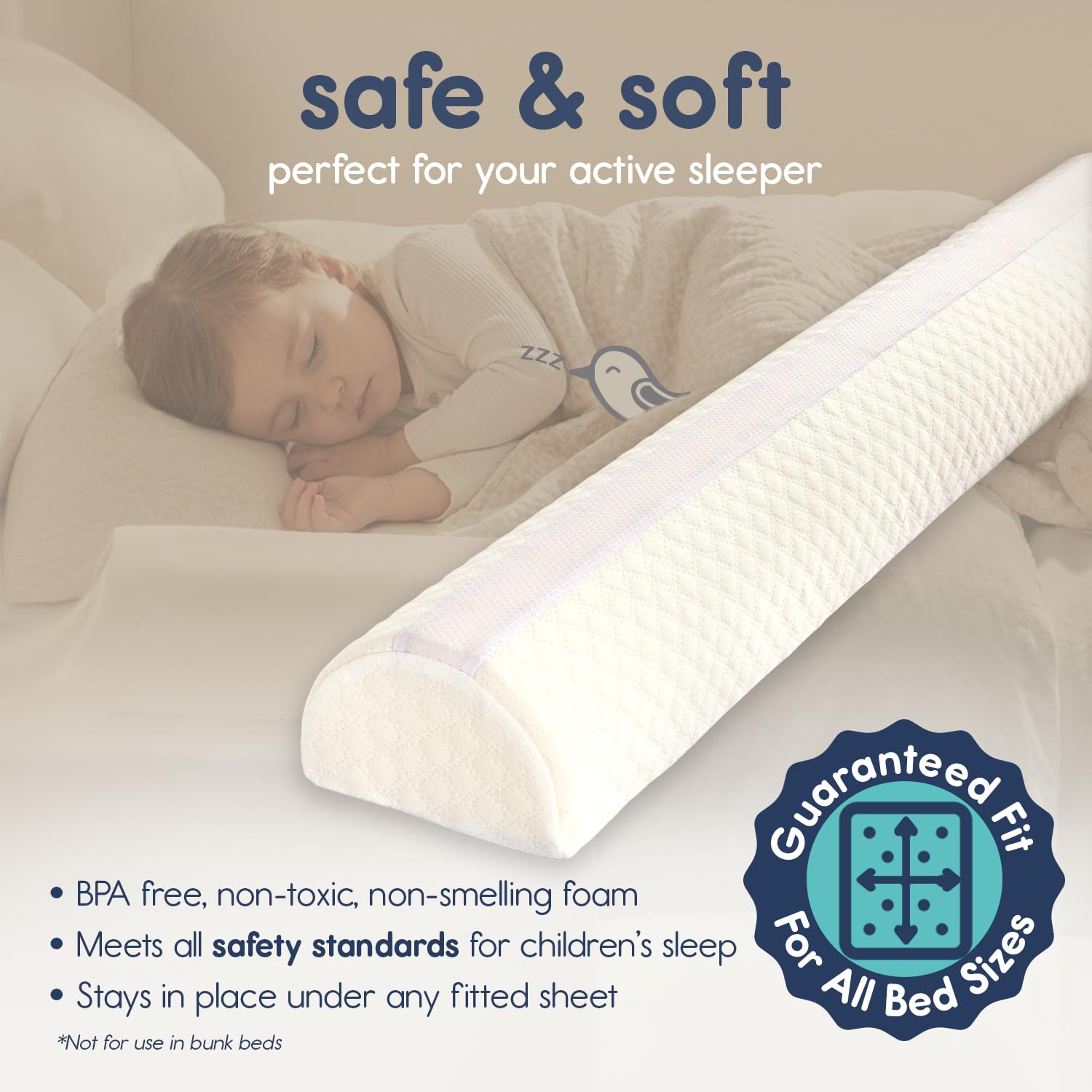
When your baby starts climbing out of the crib — or when your pediatrician says it’s time to lower the mattress no further — you’ve arrived at the crib-to-toddler transition: the moment you remove the front rail of a convertible crib (a crib designed to reconfigure into a toddler or full-size bed) and replace it with a shorter guard or bumper to keep a newly mobile toddler from rolling onto the floor during the night. A foam bed rail bumper is exactly what it sounds like: a dense foam bar, usually covered in a washable fabric sleeve, that attaches along the open side of the converted bed and acts as a soft, forgiving barrier. It’s not a hard metal rail, and it’s not a crib bumper (the padded fabric liner that ties around all four interior sides of an infant crib — a product the American Academy of Pediatrics advises against for babies under twelve months). This is something different, purpose-built for a toddler who is mobile, aware, and just needs a gentle reminder not to roll off the edge.
What makes this purchase tricky is the gap between “it looks right” and “it actually works.” Foam bumpers that slide, bunch, or compress to nothing within a month are the rule, not the exception, based on the pattern across aggregated parent reviews. This guide cuts through that noise and tells you what to look for, what the tradeoffs cost you, and which scenarios call for which solution.
| EDITOR'S PICK[Hiccapop [2-Pack] Foam Bed Bump…](https://www.amazon.com/dp/B01DTBKPWO?tag=greenflower20-20) | Mid-tier[Shinnwa Bed Bumpers for Toddler…](https://www.amazon.com/dp/B07CSR27PB?tag=greenflower20-20) | Budget pickToddlers' Bed Rail Bumpers Prot… | |
|---|---|---|---|
| Material | Foam w/ water-resistant cover | Memory foam | Soft cushioned barrier |
| Water-resistant | ✓ | — | — |
| Non-slip bottom | — | ✓ | — |
| Length | — | — | 2.3 ft |
| Machine washable | — | ✓ | — |
| Price | $54.99 | $39.99 | $22.49 |
| See on Amazon → | See on Amazon → | See on Amazon → |
Why “Stays Put” Is the Only Spec That Actually Matters
It sounds obvious, but it’s worth naming explicitly: a foam rail bumper that migrates toward the foot of the bed by 2 a.m. has failed its one job. The U.S. Consumer Product Safety Commission’s toddler bed safety guidelines emphasize that any bed rail or guard must remain secure throughout the night, because a gap between the bumper and the mattress edge is itself a hazard — a child can become wedged in that space.
The attachment system is therefore not a secondary detail. It is the product. Everything else — foam density, cover fabric, colorway — is secondary to whether the bumper stays where you put it.
The Three Attachment Systems, Ranked by Hold
1. Under-mattress strap with tuck-in panel. A wide fabric flap extends from the base of the foam log and slides between the mattress and the box spring or platform slat. The mattress’s own weight holds it. Owners consistently report this is the most reliable system on convertible cribs, because the mattress sits low (typically on a platform base after conversion) and the downward pressure is constant. The limitation: it requires a mattress with enough clearance to accept the tuck-in panel without buckling. On ultra-firm, thick foam toddler mattresses — which have become more common as parents opt for OEKO-TEX Standard 100–certified (a certification confirming the textile has been tested for harmful substances) foam mattresses from brands like Newton or Naturepedic — the gap can be too tight.
2. Velcro or buckle strap looped around the slat or frame. The foam log attaches via a strap that routes under the mattress and buckles or velcros to itself beneath the frame. More adjustable than a tuck-in, and compatible with a wider range of mattress thicknesses. The tradeoff: strap tension loosens over weeks of use, and parents in long-run reviews consistently flag that re-tightening every one to two weeks becomes a recurring chore. For a toddler who moves a lot in sleep, this system needs monitoring.
3. Adhesive strips or friction fit only. These appear on the lowest-cost options in the $12–$25 range. Reviewers at BabyGearLab and Good Housekeeping consistently rate friction-fit bumpers as the weakest category for overnight security. If you are considering this attachment type, understand that it is almost certainly going to require supplementation — either a strap added by the parent or a bed sheet pulled tightly over the top to hold it. That is a workaround, not a solution.
Foam Density: The Spec That Determines Longevity
Foam bumpers are sold in a wide range of densities, and the industry does not standardize how they communicate this to parents. You will see descriptions like “firm foam core,” “high-density foam,” or simply no specification at all.
What you’re actually evaluating: A low-density foam (think pool noodle) compresses under a toddler’s body weight and offers minimal resistance at the edge. A high-density foam (closer to a firm pillow insert or a yoga block) maintains its shape and provides a real physical cue that the child has reached the bed’s edge.
For toddlers who are light sleepers and simply need a reminder, a medium-density foam is adequate and more comfortable to lean against. For active sleepers — kids who rotate, kick, and push against surfaces — reviewers consistently favor the firmest foam option they can find in their budget range.
By the numbers:
- Standard toddler bed rail foam length: 43–48 inches (to cover most of the mattress’s long side)
- Typical foam density range across retail bumpers: 1.2 lb/ft³ (soft) to 1.8 lb/ft³ (firm)
- OEKO-TEX Standard 100 certified covers: found on roughly 30–40% of bumpers in the $35–$80 price tier (based on current retail listings, May 2026)
- Useful life before foam compression becomes a safety concern: 12–18 months for low-density; 24–36 months for high-density, per manufacturer guidance on several leading products
Material Safety: What Certifications to Look For
Because a toddler will absolutely mouth, chew, and drool on a foam bumper — especially at the fabric cover’s edges — material certification matters. This is the same evaluation framework you’d apply to a silicone crib rail guard, just applied to a different form factor.
OEKO-TEX Standard 100: The most common certification on fabric covers. It certifies that every component of the textile — threads, dyes, finishing agents — has been tested against a list of harmful substances. It does not certify the foam core itself, only the fabric. If the cover can be unzipped and removed for washing (a strong usability plus), check whether the certification extends to the zipper and closure hardware.
GOTS (Global Organic Textile Standard): A stricter certification covering the entire supply chain, from fiber cultivation to manufacturing. Genuinely GOTS-certified foam bumper covers are rare in this category, but they exist in the boutique tier (typically $70–$120). If organic textiles are a non-negotiable for your nursery, plan for this price range.
CertiPUR-US: This certification applies specifically to polyurethane foam and verifies it is made without certain flame retardants, heavy metals, and formaldehyde. If the manufacturer names their foam certification at all, CertiPUR-US is the one to look for. Many brands do not certify the foam at all, which is worth noting before purchasing. What to Expect’s overview of toddler bed transitions notes that parents should specifically ask about foam composition when purchasing any sleep-adjacent product for this age group.
The honest tradeoff: OEKO-TEX fabric + CertiPUR-US foam is the practical ceiling of safety certification for most products in this category. If a listing claims “non-toxic foam” without naming a third-party certification, that claim is the manufacturer’s own assertion, not independently verified.
Crib Model Compatibility: Measure Before You Order
This is the step most parents skip, and it’s the most common source of returns in this category.
Convertible cribs (the crib type designed to become a toddler bed) vary in three dimensions that affect bumper fit:
-
Mattress height after conversion. The mattress position drops to the lowest setting during conversion on most models. The bumper’s tuck-in panel must be long enough to reach under a mattress at that height. A panel designed for a 6-inch mattress will not hold securely under a 9-inch GOTS-organic foam mattress.
-
Open-rail span. Most convertible cribs replace the front rail with a low toddler guard, leaving a gap above the guard through which a child could roll. The foam bumper needs to cover that gap, not just sit beside the guard. Measure from the mattress surface to the top of where the original rail sat.
-
Slat configuration. Cribs with closely spaced slats (required to be no more than 2⅜ inches apart per CPSC standards) sometimes interfere with strap-under-slat attachment systems. Models with solid-panel sides below the mattress — like several Pottery Barn Kids and IKEA Sundvik configurations — require a bumper with a purely mattress-tuck attachment.
HealthyChildren.org’s guidance on toddler sleep safety recommends verifying any bed rail or bumper’s compatibility with the specific crib model before purchase, and contacting the crib manufacturer directly if the conversion kit configuration is unusual.
The Decision Framework: If X, Then Y
You’ve read the tradeoffs. Here is the plain-language version:
If your toddler is an active sleeper who kicks and pushes against surfaces: Prioritize high-density foam and an under-mattress tuck-in attachment. Budget $45–$75. Do not buy friction-fit.
If your mattress is thick (9 inches or more) and may not accommodate a tuck-in panel: Choose a strap-and-buckle system and commit to re-tightening it every two weeks. Set a phone reminder.
If material certification is non-negotiable: Look specifically for CertiPUR-US foam + OEKO-TEX fabric cover, and confirm the cover is removable and machine washable before purchasing. This narrows your field considerably but is achievable in the $50–$80 range.
If you’re buying as a gift and don’t know the recipient’s crib model: A gift card to a retailer where the parent can confirm compatibility — or a bumper with a universal strap system and generous return window — is the safer move than guessing at slat configuration. Good Housekeeping’s 2025 roundup of best toddler bed rails specifically notes that universal-fit strap systems from established nursery brands photograph well and arrive gift-ready, making them the default recommendation for registry gifting.
If budget is the primary constraint (under $25): Understand you are buying a friction-fit or very-low-density product. It may work for a light sleeper. Supplement with a tightly fitted sheet over the bumper to improve hold. Plan to replace it within 12 months.
The crib-to-toddler transition is one of the shorter phases in a child’s sleep history — most families are through it within 12 to 18 months. That context matters when you’re evaluating cost. A $65 bumper that holds all night, every night, for 18 months costs roughly $3.60 per month of secure sleep. The $15 version that migrates by midnight is, effectively, free — until it isn’t.